
Erkend in de Gartner® Market Guide voor Retail Workforce Management Technology
Retailorganisaties staan onder druk. Ze moeten efficiënter werken én tegelijk een betere ervaring bieden aan klanten én medewerkers.
De Gartner® Market Guide voor Retail Workforce Transformation laat zien hoe organisaties hun aanpak van workforce management aanpassen om dit voor elkaar te krijgen.
In dit rapport ontdek je:
- Hoe je personeelskosten beheerst en tegelijkertijd beter plant op basis van vraag
- Hoe datagedreven roosters bijdragen aan hogere productiviteit op de werkvloer
- Waarom realtime inzicht essentieel is om sneller en beter bij te sturen
Je krijgt een helder beeld van de trends die retail veranderen – en waar je als organisatie op moet letten als je je personeelsstrategie wilt moderniseren.
Waarom workforce management in retail verder gaat dan roosters
Retail is fundamenteel veranderd. Winkels zijn niet meer alleen verkooppunten, maar ook fulfillment hubs. Medewerkers moeten meer taken uitvoeren, vaak tegelijk, en werken met verschillende systemen en processen.
Veel organisaties lopen vast op verouderde systemen en losse tools. Dat zorgt voor inefficiëntie, fouten en onnodige kosten.
De Gartner® Market Guide laat zien hoe IT- en operations-leiders workforce management inzetten als strategisch instrument: om prestaties te verbeteren én medewerkers beter te ondersteunen.
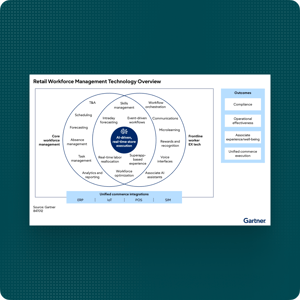
Wat je leert uit de Retail Market Guide 2026
Het rapport laat zien hoe het landschap verandert en waar de grootste kansen liggen:
- AI in store operations: Bouw een sterke basis voor personeelsplanning met AI-gestuurde forecasting, automatische roosters en skill-based planning. Zo sluit je planning beter aan op de realiteit in de winkel.
- Ondersteuning van medewerkers met AI: 67% van de CIO’s wil dit jaar meer investeren in AI-assistenten voor medewerkers. Denk aan snelle antwoorden op vragen, minder afhankelijkheid van managers en minder tijd kwijt aan administratie.
- Eén geïntegreerde operatie:
Koppel workforce management aan kassasystemen, klantstromen, voorraad en fulfillment. Zo kun je direct inspelen op veranderingen in vraag en je planning gedurende de dag aanpassen. - Meer autonome planning: Tegen 2028 kan 40% van de open diensten automatisch worden ingevuld op basis van skills en voorkeuren van medewerkers. Dat scheelt managers tijd en zorgt voor betere inzet van personeel.

Waarom Quinyx voor retail
Quinyx is al vijf keer erkend in de Gartner® Market Guide en helpt retailers om slimmer te plannen en beter te sturen.
Schommelende klantstromen
Met AI-forecasting voorspel je personeelsbehoefte nauwkeuriger en voorkom je over- of onderbezetting.
Complexe werkzaamheden in de winkel
Met skill-based personeelsplanning zet je altijd de juiste mensen op de juiste taken – van click & collect tot schapbeheer.
Hoog personeelsverloop
Self-service, diensten ruilen en mobiele communicatie zorgen voor meer flexibiliteit en betrokkenheid.
Versnipperde systemen
Door integraties met POS- en andere systemen stuur je realtime bij en houd je controle over je personeelskosten gedurende de dag.
Maak betere keuzes voor 2026
Met traditionele roosters verlies je flexibiliteit én controle. Krijg de inzichten die je nodig hebt om slimmer te plannen, kosten te beheersen en medewerkers beter te ondersteunen.