
Up to 20% lower labor costs
Achieve leaner, smarter staffing by aligning labor hours with true demand.
Quinyx Forecasting uses AI workforce forecasting to turn your data into clear, reliable demand signals so you can staff every hour with confidence.
The result: less over- and under-staffing, lower labor costs, and smoother operations across every site.
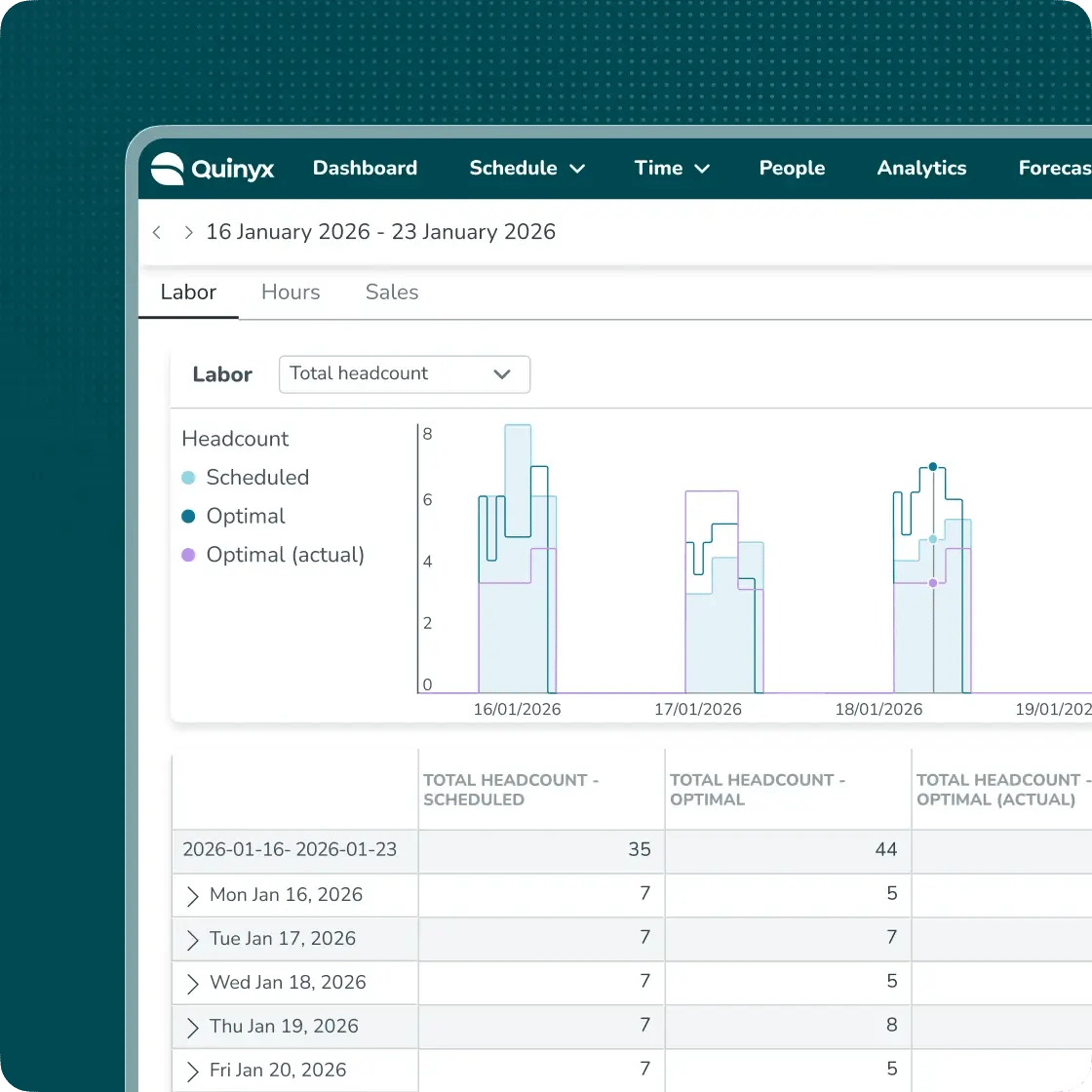









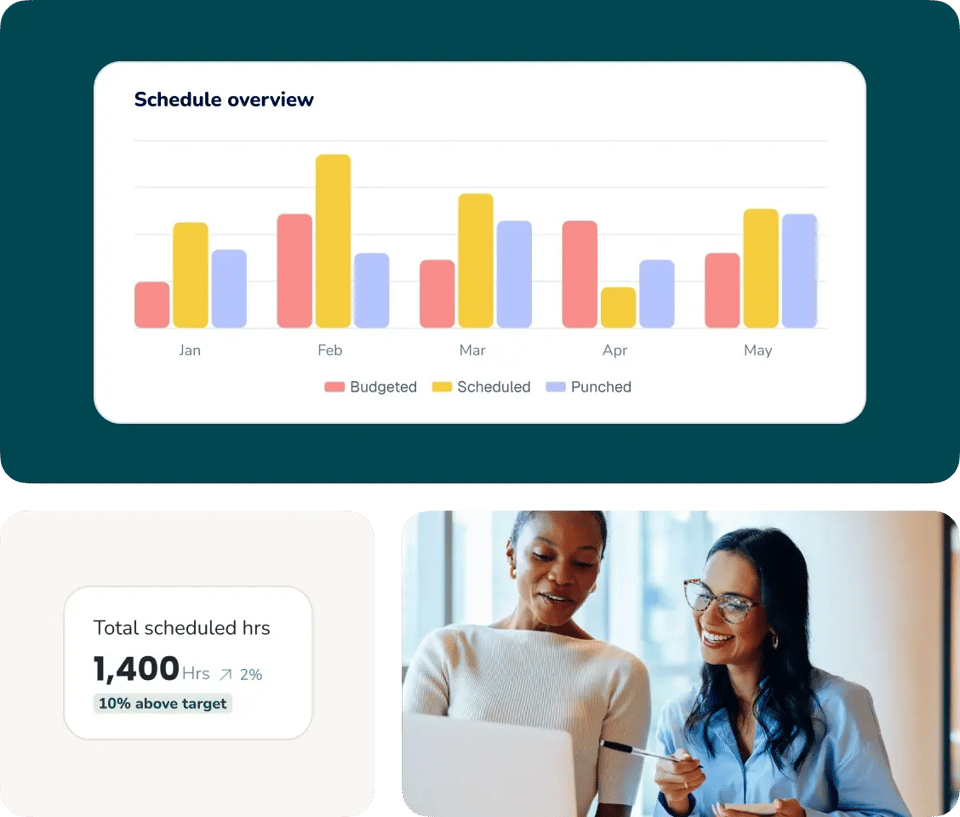
Quinyx Forecasting helps businesses accurately predict labor demand across stores, departments, and regions. It analyzes trends such as sales, transactions, foot traffic, promotions, and seasonal peaks to generate precise, industry-tuned forecasts.
The system automatically selects or blends the best-performing models for each environment, continuously improving as more data flows in. Managers then use these forecasts to build optimized schedules that match staffing levels with real demand – not guesswork.
Achieve leaner, smarter staffing by aligning labor hours with true demand.

Enterprise customers report highly accurate forecasts that keep schedules on track.

When combined with Quinyx Scheduling, managers spend far less time building schedules.

Better alignment between workload and staffing reduces stress, burnout, and attrition.
Forecasting is built for real-world operational complexity, where every hour of staffing affects cost, service, and employee well-being.

Predict staffing needs with precision using AI models tailored to complex, shift-based operations.

Align headcount with expected demand to avoid costly overstaffing and missed service opportunities.

Turn accurate forecasts directly into optimized schedules that reflect your trading patterns, opening hours, and constraints.

Balance workloads so teams can focus on service, not firefighting, and employees finish shifts feeling in control, not overwhelmed.

Configure forecasts by industry, region, or site so they support your operational goals, cost targets, and workforce constraints – enabling smarter scheduling and more confident capacity planning.
Quinyx Forecasting sits at the heart of your workforce planning process, connecting business data to day-to-day scheduling decisions.
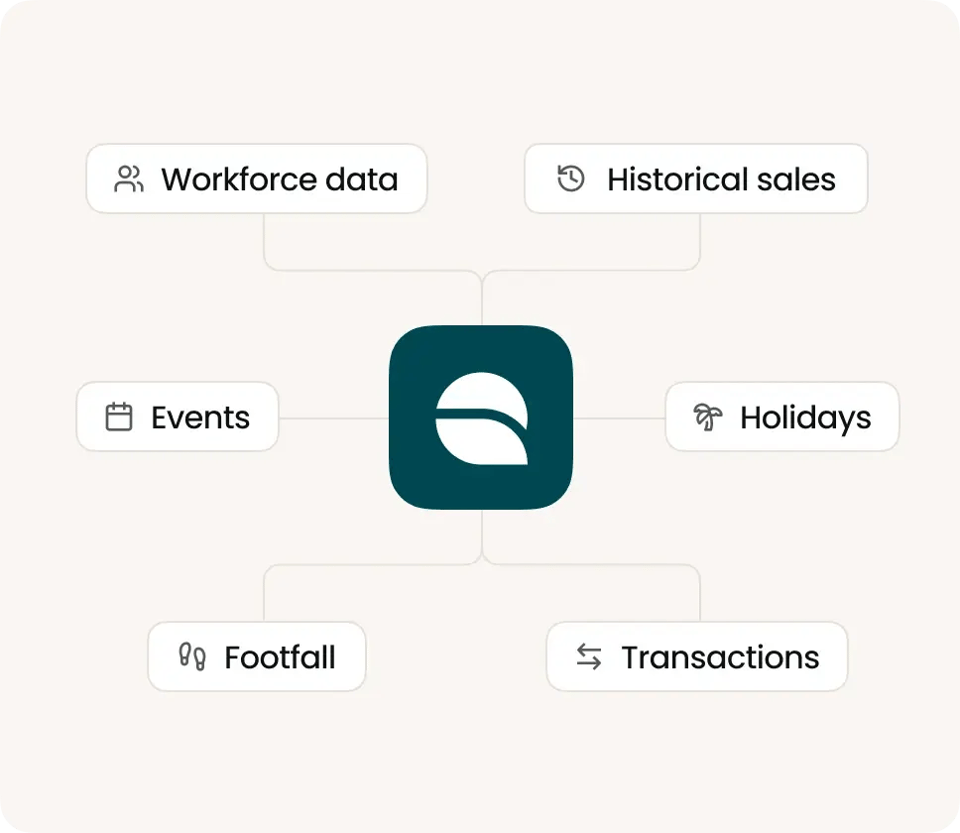
Step one
Bring together historical sales, transactions, foot traffic, workforce data, and external factors such as events and holidays.
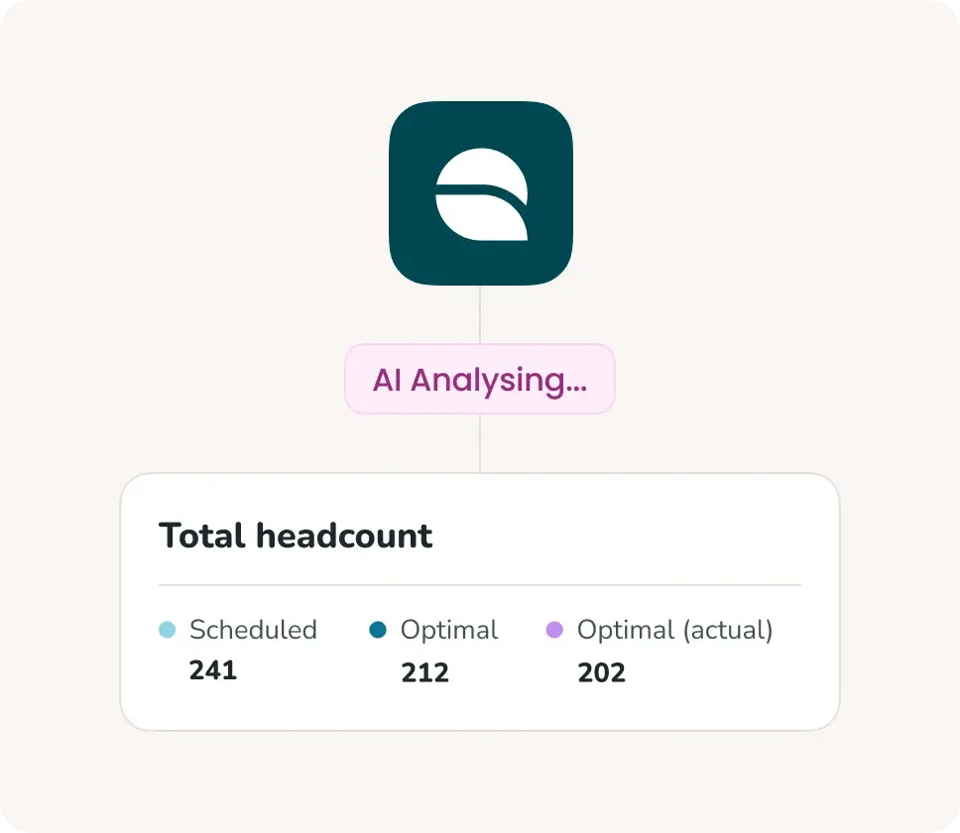
Step two
More than 20 AI-powered models analyze patterns, trends, and seasonality to predict demand at organization, region, site, or department level.
Step three
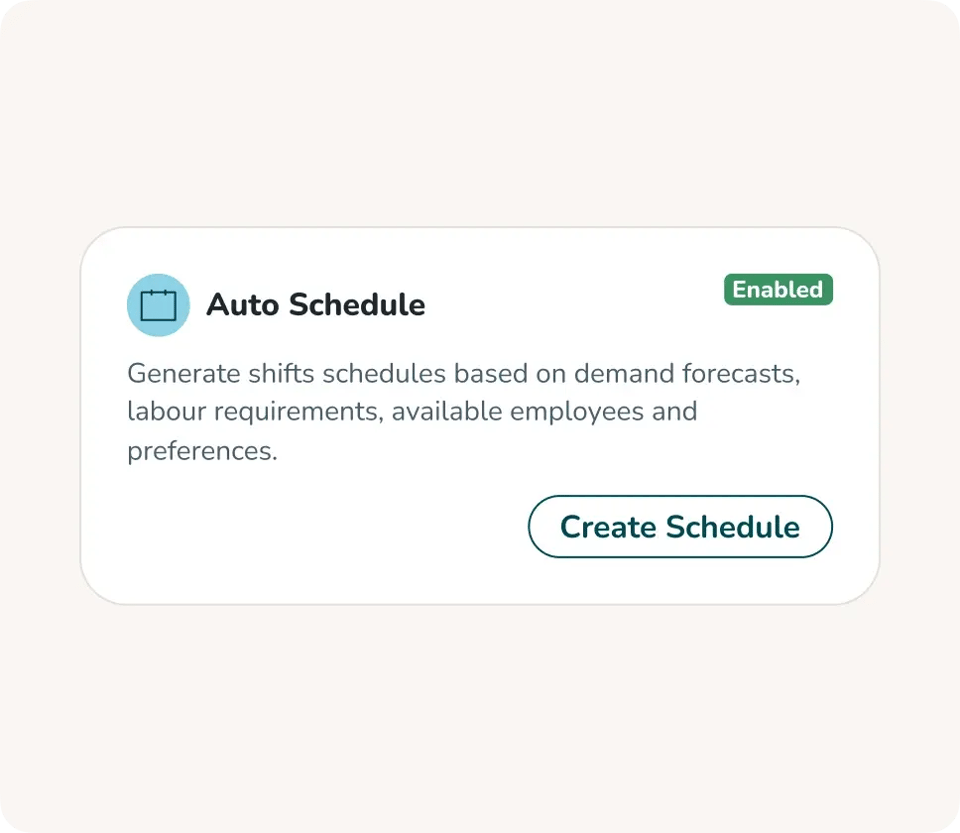
Forecasts flow into Quinyx Scheduling so managers can create fair, compliant, demand-driven schedules in just a few clicks. They keep the control, while the system does the heavy lifting.



Quinyx Forecasting is designed for teams that are still relying on spreadsheets, gut feel, or rigid tools that cannot keep up with change. It helps you tackle:

Replace error-prone spreadsheets with automated, AI-driven forecasts that update as your data changes.

Align staffing with demand peaks and troughs to reduce idle time, overtime, and missed sales.
Automatically adjust for historic seasonal patterns, promotions, campaigns, and local events so you are always prepared for peak periods.

Integrate data from POS, e-commerce, operations, and more to surface the demand signals that matter most to your workforce plans.
Generate and aggregate forecasts at organization, region, site, or department level within a single platform, with consistent logic and full control.
“The forecasting function is extremely helpful. It makes planning easier and more predictable – which is valuable both for management and employees.”
