Background3 (1)

Workforce management software: plan, schedule, and optimise your team

Quinyx is AI-powered workforce management software built for the frontline. It brings demand forecasting, employee scheduling, time and attendance, and workforce analytics into one platform, so you can match staffing to demand, support compliance, and give every employee a better experience.

Whether you run hundreds of stores, distribution centres, or hospitality venues, Quinyx helps you reduce labour costs and run a smarter workforce – all from one place.

advanced-analytics-simplified-wfm-data

What is workforce management software?

Quinyx is AI-powered workforce management software that helps organisations plan, manage, and optimise a frontline workforce from one platform. It brings together demand forecasting, employee scheduling software, time and attendance tracking, absence management, labour compliance, and workforce analytics, so the right people are in the right place at the right time – with AI built in to reduce labour costs, improve efficiency, and create better employee experiences.

Why workforce management matters

For most frontline businesses, labour is the largest controllable cost and a major driver of customer experience. When planning relies on spreadsheets and disconnected systems, the result is over- and under-staffing, avoidable overtime, compliance exposure, and managers firefighting instead of leading. With labour scarce, turnover high, and regulation growing, IDC notes that workforce management has moved from a back-office tool to a strategic capability, now central to performance, compliance, and engagement across EMEA (IDC, 2026) – a direct lever on cost, risk, and retention.

hand-coins

Reduce labour costs and improve workforce efficiency

When staffing doesn't match demand, money leaks both ways: overstaffing inflates spend on quiet days, understaffing costs sales on busy ones, and manual scheduling hides the gap between planned and actual hours until it's too late. Aligning staffing with real demand is where labour cost optimisation starts. Accurate demand forecasting and employee scheduling software help you control labour spend, cut overtime, and reduce idle time without compromising service. Quinyx customers reduce overtime by up to 50%.

check-check

Ensure workforce compliance and reduce risk

Labour compliance gets harder with every region you operate in – working time rules, rest requirements, union and collective agreements, and local laws all differ, and they change. Handling this manually invites non-compliant schedules, errors, and the financial and legal consequences that follow. Consistent, rule-based processes reduce that risk at scale: when labour rules are applied automatically as schedules are built, and time and attendance data are accurate, you can support compliance across every location rather than checking it after the fact.

eye

Increase workforce visibility and operational control

When workforce data is scattered across HR, payroll, and scheduling systems, leaders lose visibility – and with it, control over performance, labour costs, and staffing levels, especially across multiple sites. A single, real-time view changes that. Bringing real-time workforce data, attendance tracking, and timesheet data into one place gives managers the operational control to decide faster and keep standards consistent across every team, location, and region. This is where workforce analytics turns raw activity into decisions leaders can act on.

heart

Improve employee experience and retention

For frontline employees and shift-based workers, the schedule is the job. Inconsistent shifts, little notice, and no easy way to change them erode trust – and show up as disengagement, absenteeism, and higher turnover. The fix is transparency and flexibility: reliable schedules, mobile access to shifts, and the ability to swap or manage shifts in real time. Fair, flexible scheduling backed by employee engagement software is one of the most practical retention levers a frontline business has. Quinyx customers see up to 13% better employee engagement.

A selection of our customers

Key features of workforce management software

Workforce management software brings several core capabilities into one platform. Each handles a different part of running a frontline workforce, and they're strongest working as one system rather than separate tools.

Ava Assistant

Quinyx AI

Ava – your intelligent workforce assistant

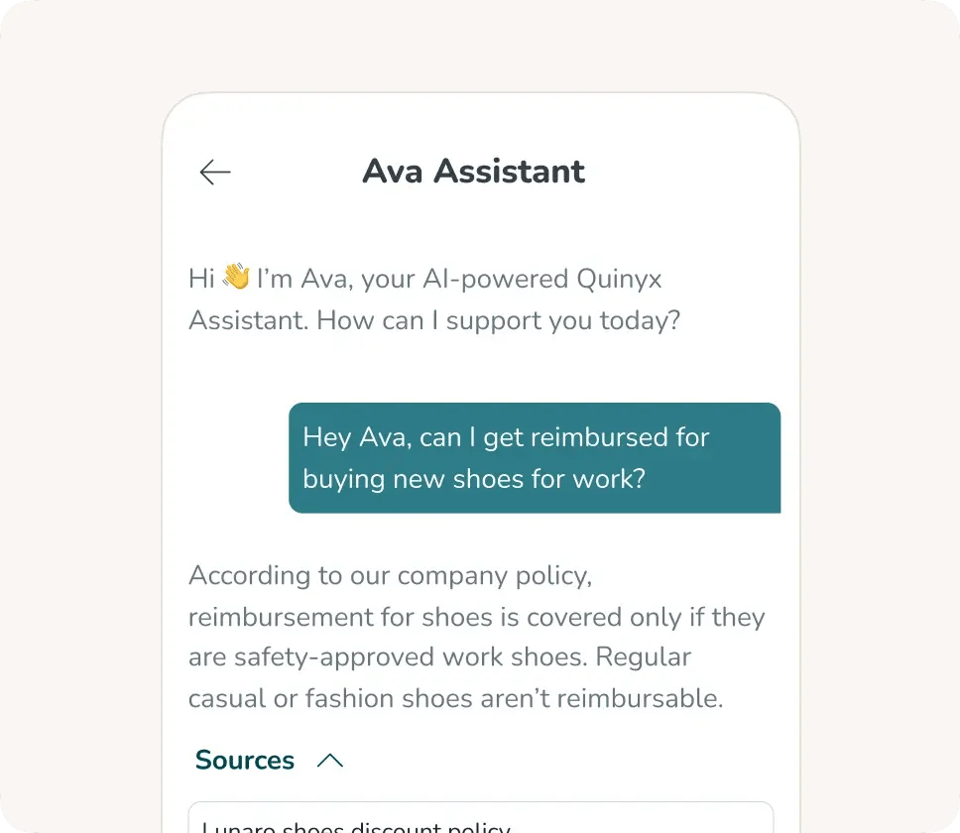
Ava is an AI embedded across the entire Quinyx platform, turning workforce data, schedules, and policies into instant answers, insights, and proactive recommendations. Employees get answers in seconds; managers spot staffing gaps, overtime risks, and compliance issues before they become problems – always with human oversight.

Key capabilities

  • Instant answers grounded in your workforce data and policies

  • Embedded across web and mobile

  • Human oversight for every recommendation

  • Available in 20+ languages

Schedule Management

Manage your workforce

Employee scheduling software

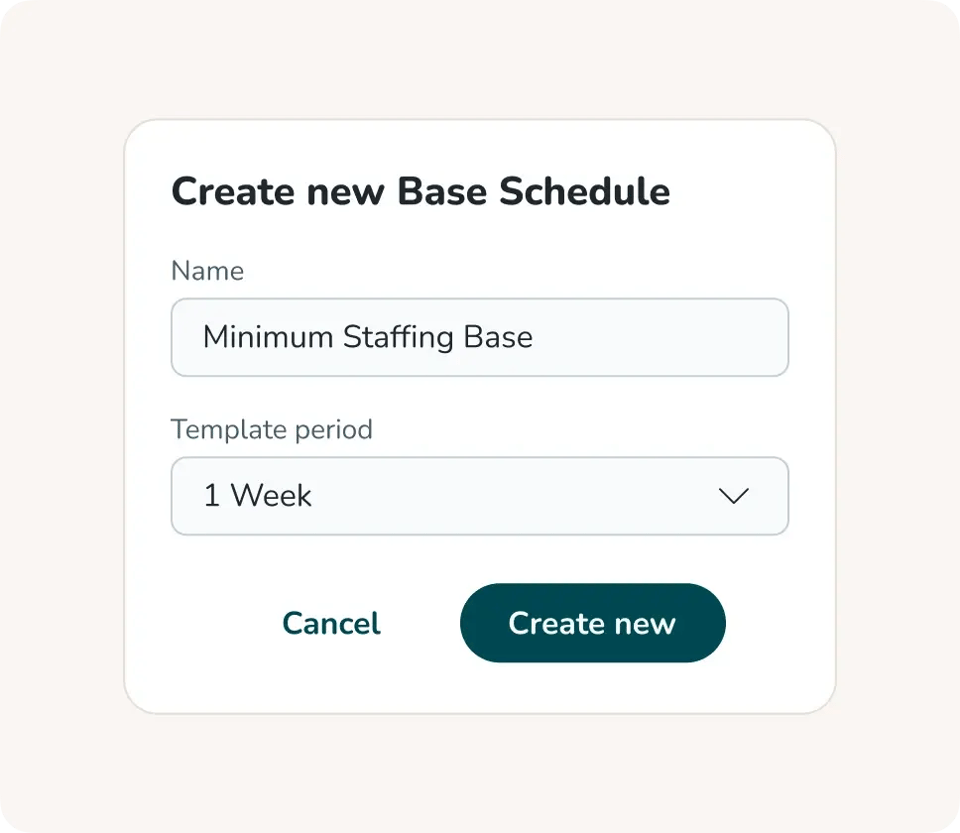
Quinyx uses AI to help managers build compliant, demand-driven schedules in minutes, balancing customer demand, labour costs, employee preferences, skills, and labour rules automatically.

Key capabilities

  • AI-powered demand-based scheduling

  • Multi-site workforce planning

  • Skills and qualification management

  • Built-in labour law and collective agreement compliance

Result: Starbucks UK cut scheduling time from four hours to 30 minutes.

Auto-Schedule

Optimise your business

Scheduling automation

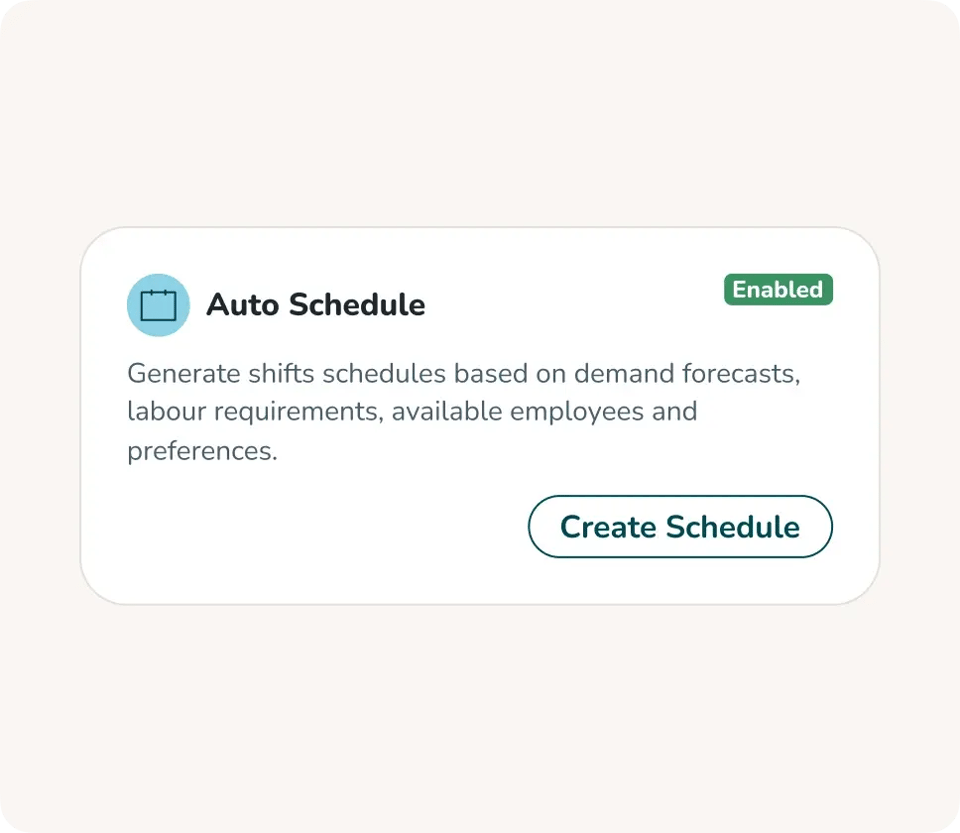
Auto Schedule and Auto Assign analyse millions of scheduling combinations in seconds, helping managers build optimised schedules faster while keeping full control over final approval.

Key capabilities

  • Auto Schedule

  • Auto Assign

  • Intelligent open shift management

  • Employee preference matching

Result: Customers spend up to 92% less time creating schedules.

Mobile-first clocking

Manage your workforce

Time and attendance tracking

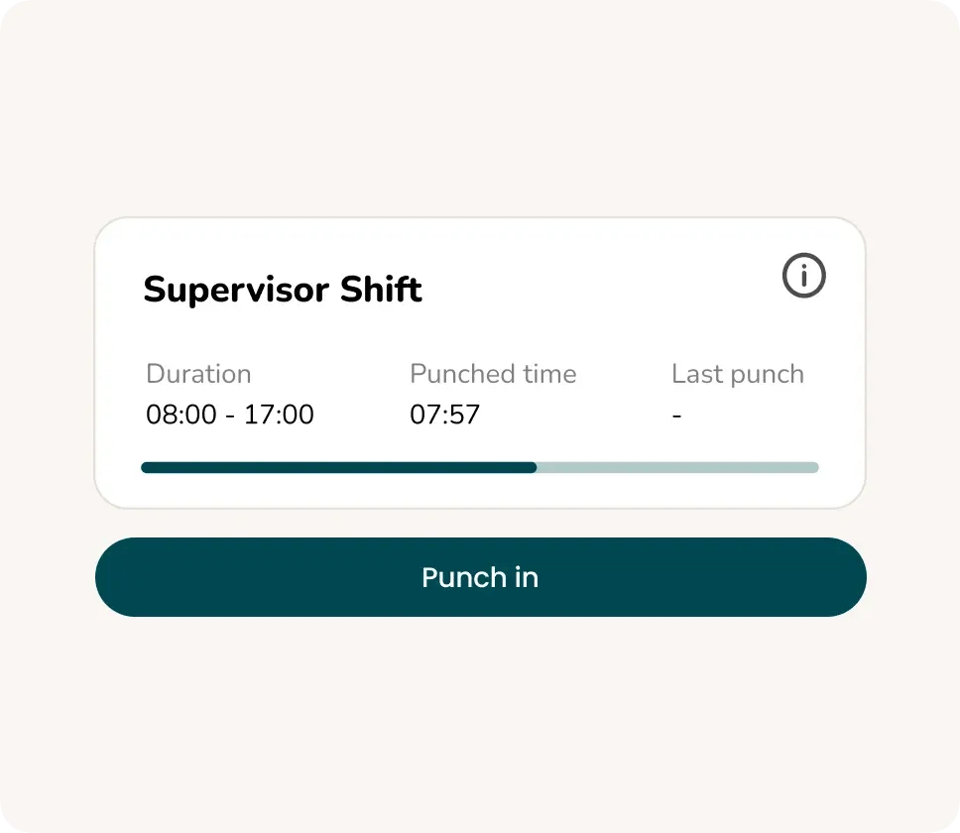
Employees clock in from mobile, tablet, or time clock, and managers approve hours in seconds – while overtime, premiums, and labour rules are validated automatically before payroll.

Key capabilities

  • Mobile time capture
  • Automated overtime management
  • Absence management
  • Payroll-ready time records


Result: Stena Line reduced payroll administration by up to 85%.

Insights

Optimise your business

Operational insights

Quinyx combines historical trends, operational drivers, and AI-powered forecasting to predict labour demand more accurately, so you schedule the right people, in the right place, at the right time.

Key capabilities

  • AI-powered demand forecasting
  • Labour demand prediction
  • Algorithm Factory
  • Labour budgeting

Result: Organisations improve forecasting accuracy by 31%.

Analytics – go deeper with confidence

Manage your workforce

Workforce analytics and reporting

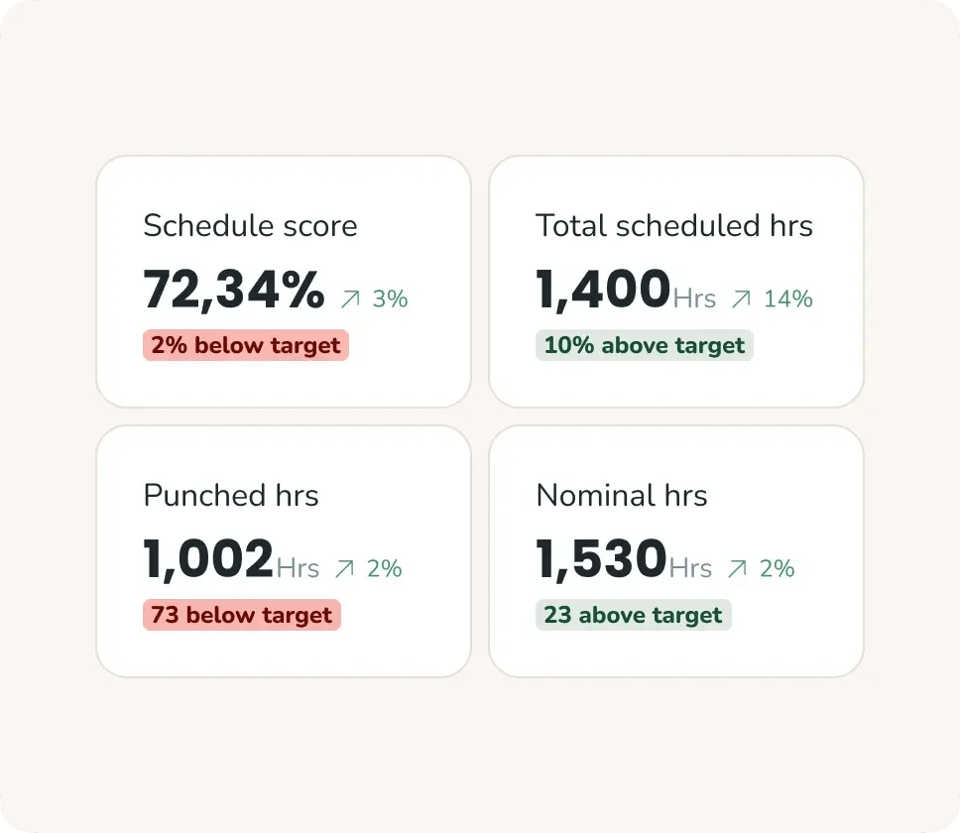
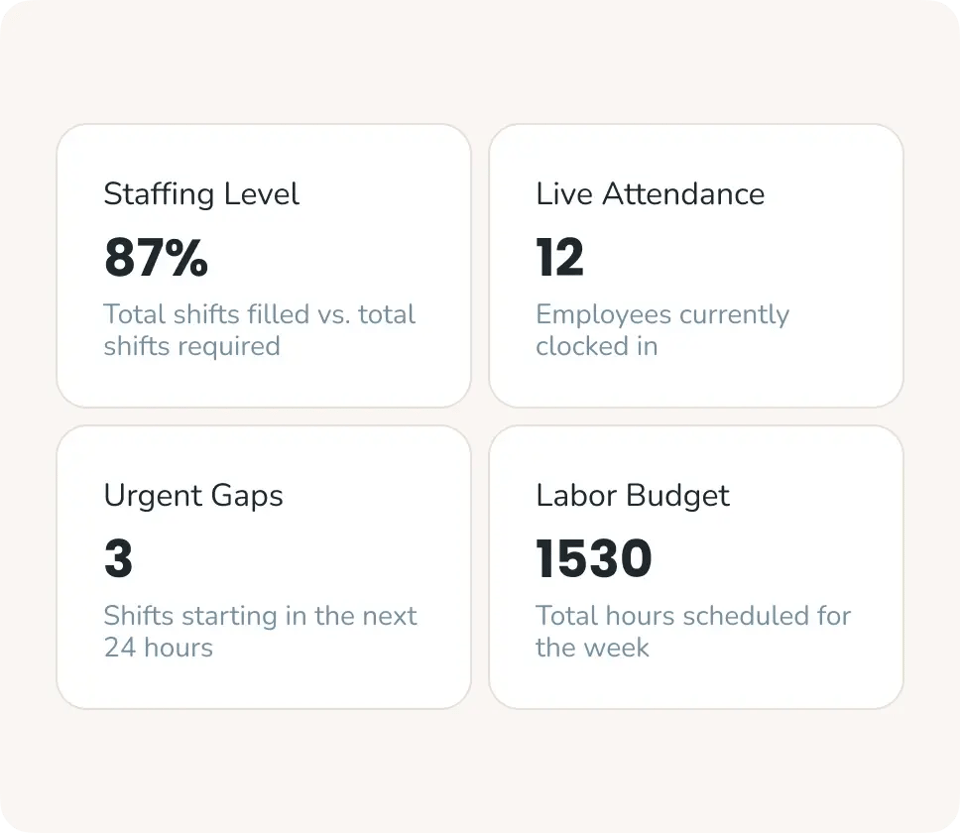
Quinyx brings labour costs, productivity, scheduling performance, and workforce trends into real-time dashboards, giving leaders complete visibility across every site, region, and team.

Key capabilities

  • Real-time dashboards
  • Labour cost analysis
  • Productivity reporting
  • Workforce KPIs

Result: Managers save 7–12 hours every week through better visibility.

Engagement layer

Engage your frontline

Engagement and Employee Hub

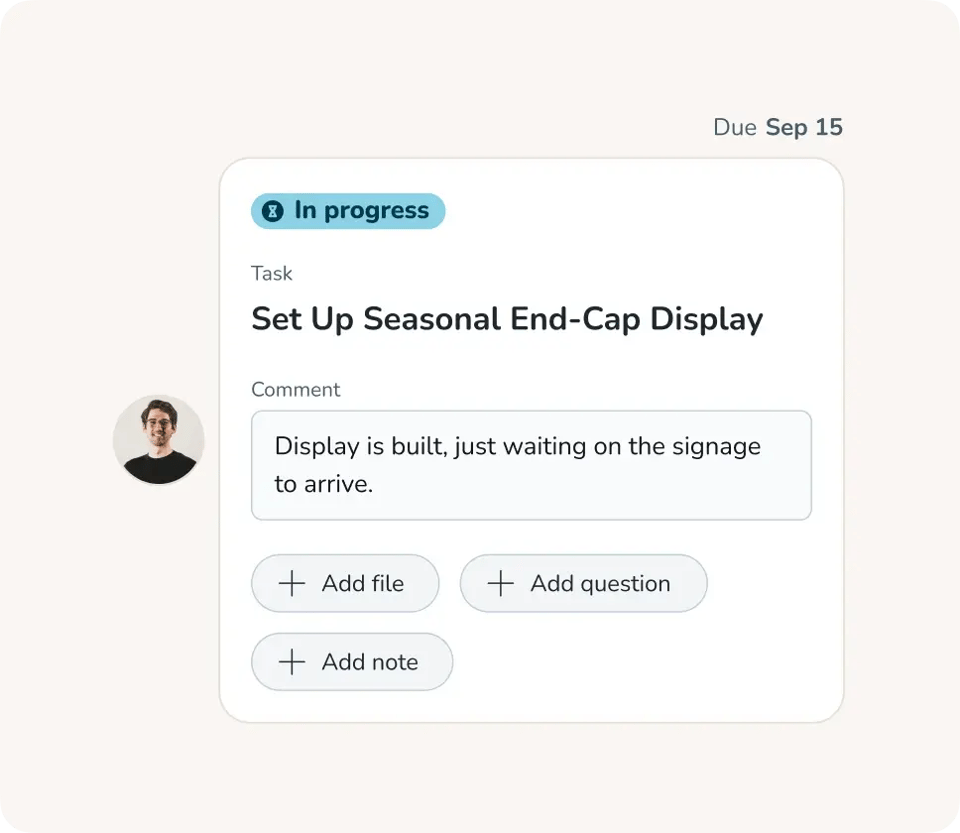
Quinyx gives employees one mobile app to view schedules, swap shifts, request leave, complete tasks, get recognition, and stay connected – so they're more engaged, more productive, and more likely to stay.

Key capabilities

  • Employee mobile app

  • Shift marketplace and leave requests

  • Task management and communication
  • Recognition, surveys, and learning

Result: HMV achieved 99% task completion and 92% employee adoption.

Data as a Service – connect workforce analytics to your wider ecosystem

Integrations

Connects with the systems you already use

Workforce management works best when it's connected. Quinyx integrates with your existing stack so data flows automatically, forecasts use accurate operational data, and approved hours are payroll-ready – without duplicate entry.

  • Payroll – pre-built integrations validate hours, overtime, premiums, and pay rules before they reach payroll.
  • HR and HRIS – employee records, contracts, and role changes flow into Quinyx automatically.
  • POS, ERP, and operational data – sales, footfall, and transactions feed the AI forecasting engine.

  • Open platform – REST APIs, SFTP, webhooks, single sign-on, and a developer portal connect everything else.

Recognised as a Leader by IDC MarketScape

Positioned as a Leader in the IDC MarketScape: EMEA AI-Enabled Workforce Management and Compliance 2025–2026

Recognised for intuitive user experiences, AI-driven forecasting and scheduling, and continued leadership in workforce management across Europe.

92%

less time spent creating schedule

50%

less overtime

Zero

compliance violations

Customer testimonials

What our customers say

Quinyx fits perfectly into that strategy. It is cloud and more than that, they are a pure player in workforce management.

RitualsNico Wartenbergh, CTO
See their story

Ever since we started using Quinyx, the time spent on scheduling has decreased by 30–40% in each of our coffee shops. A very large decrease.

Espresso HouseMarcus Henningson, Regional Manager
See their story

We have complex scheduling needs. Quinyx helps us schedule staff shifts flexibly and plan our workforce requirements accurately.

Kal TireClifford Smith, CIO
See their story

Workforce management vs employee scheduling software

Employee scheduling software and workforce management software are related but not the same. Scheduling software does one job: building and managing shifts. Workforce management software is the broader category that also covers forecasting, time and attendance, absence, compliance, and analytics. Scheduling is one capability within workforce management.

  Employee scheduling software Workforce management software
Scope Building and managing shifts The full workforce lifecycle: forecast, schedule, track, comply, and analyse
Core job Create rotas and handle shift changes Align the whole workforce with demand, cost, and compliance
Data it uses Availability and shift patterns Demand signals, worked hours, labour cost, compliance rules, and engagement
Typical buyer A single team or site that needs rotas Multi-site operations balancing cost, risk, and experience
Outcome Faster, easier scheduling Lower labour cost, reduced risk, better retention, and smarter decisions


How to choose the right workforce management software

Choosing workforce management software shapes cost control, compliance, and daily operations for years. The criteria that matter most:

Scalability and flexibility

can it grow across more sites, countries, and workforce models without a rebuild?

Compliance and local requirements

does it support the labour laws, union agreements, and rest rules in every region you operate in?

Integration with existing systems

will it connect cleanly with your payroll, HR, POS, and ERP?

Ease of use

will managers and frontline teams actually use it with little or no training?

Mobile access

can employees view schedules, swap shifts, and log hours from their phone?

Your questions, answered

FAQ

What is the difference between workforce management and employee scheduling software?

Employee scheduling software does one job: building and managing shifts. Workforce management software is the broader category that also covers demand forecasting, time and attendance, absence management, compliance, analytics, and employee engagement. Scheduling is one capability within a WFM platform. If you need to connect staffing to demand, cost, and compliance across multiple sites, you need workforce management software, not just a scheduling tool.

How does workforce management software reduce labour costs?

Workforce management software reduces labour costs by aligning staffing precisely to real demand. AI forecasting predicts what you'll need by site, role, and time period. Intelligent scheduling eliminates overstaffing in quiet periods and understaffing in busy ones, and automated overtime management prevents unplanned cost. Quinyx customers typically reduce overtime by up to 50% and spend up to 92% less time creating schedules.

How does workforce management software support compliance?

A WFM platform applies labour rules automatically as schedules are built. Working time regulations, rest period requirements, union and collective agreements, and local statutory rules are built into the scheduling engine, so non-compliant shifts are flagged before they're published. That's fundamentally different from checking compliance after the fact, which is the only option with manual processes or basic scheduling tools.

Can workforce management software integrate with payroll and HR systems?

Yes. Modern WFM platforms integrate with leading payroll providers, HR and HRIS systems, POS, and ERP tools via pre-built connectors, REST APIs, SFTP, and single sign-on. Approved hours flow to payroll automatically, employee records stay current, and operational data feeds the forecasting engine, without manual entry or duplicate data management. Quinyx adds a developer portal for teams that want to build their own integrations.

What industries benefit most from workforce management software?

Workforce management software delivers the most value in industries with large frontline workforces, shift-based operations, and multi-site complexity: retail, hospitality, logistics and distribution, healthcare, facility management, and manufacturing. These sectors share the same core challenges – high labour cost as a proportion of revenue, complex compliance requirements, and significant operational variation across locations and time periods.

Is workforce management software suitable for small businesses?

Most WFM platforms, including Quinyx, are designed for mid-market to enterprise organisations with shift-based, multi-site, or multi-country operations, typically from a few hundred to tens of thousands of employees. Smaller single-site teams can use workforce management software but may not need its full depth. WFM delivers the strongest return where operational complexity, compliance requirements, and scale make manual planning genuinely costly.

Book a demo

Ready to run a smarter workforce?

With AI-powered forecasting, intelligent scheduling, built-in compliance, and real-time insights, Quinyx helps you reduce labour costs, empower your people, and make better workforce decisions every day.