- 3 min reading
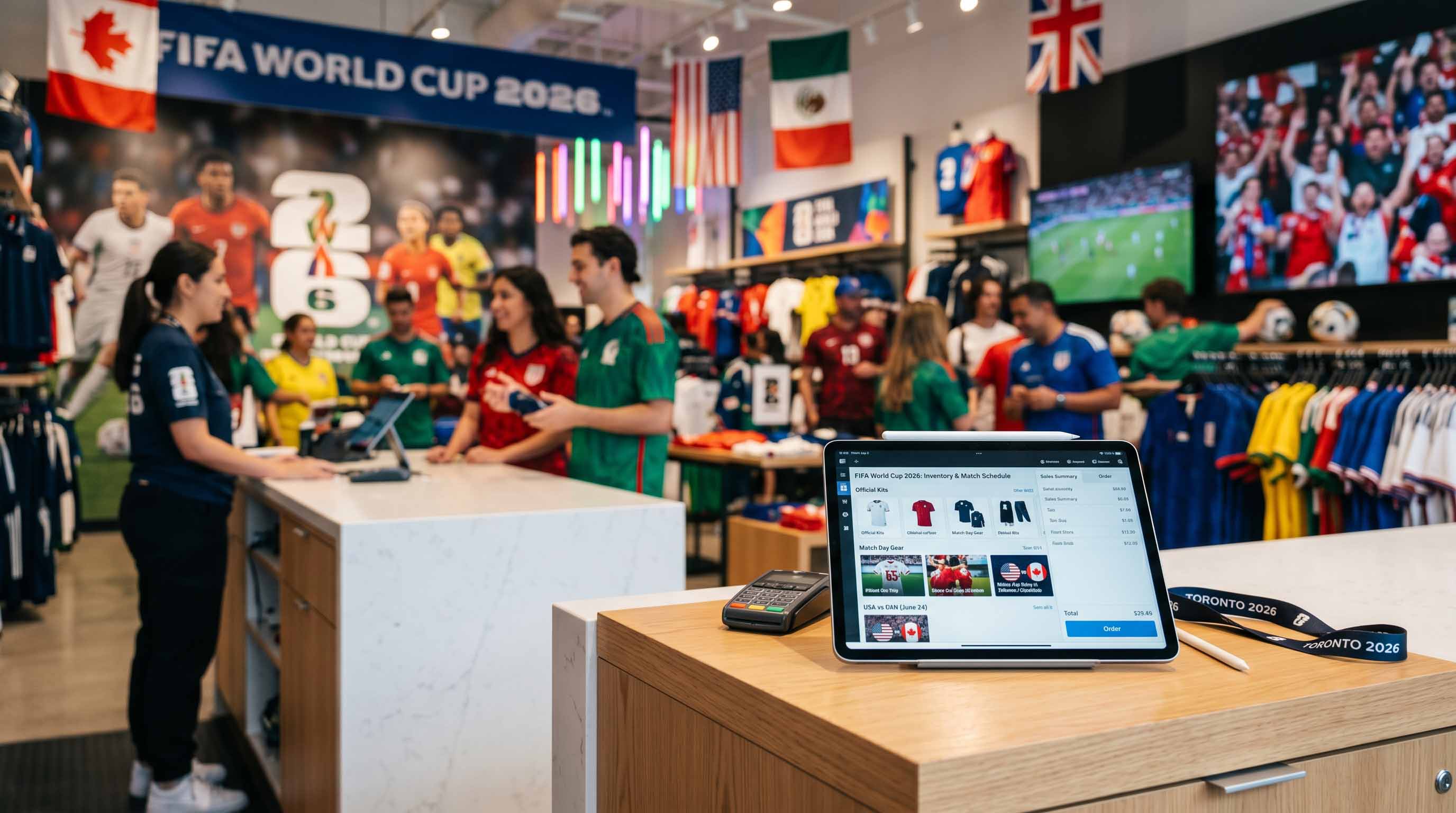
The 2026 FIFA World Cup is one of the world’s biggest sporting events. For retailers, it’s also a 39-day workforce planning challenge landing in the middle of summer.
With research showing that peak trading periods push one in three retail workers to consider quitting, the stakes are high. The tournament presents a £2.9 billion opportunity for UK retailers, but as any operator who has managed a major peak season knows, commercial opportunity and operational pressure go hand in hand.
The question isn’t whether the World Cup will create workforce disruption. It is whether your business is prepared to manage it.
Running from 11 June to 19 July across the United States, Canada, and Mexico, this year’s tournament brings late-night kick-offs for UK audiences, disrupted sleep patterns, and increased pressure on frontline teams. For retailers, that can translate into higher absence rates, scheduling gaps, and managers struggling to maintain coverage during one of the most commercially important trading periods of the year.
Existing pressure, amplified
Before a single ball was kicked, many retail workforces were already under strain.
Research from Quinyx reveals that 43% of shopfloor workers experience high or very high stress levels during peak periods, while 37% say those pressures have made them consider leaving their job. The primary causes are operational.
Understaffing is the biggest source of stress, cited by 58% of shopfloor workers, followed by unpredictable customer demand (49%). Both challenges are solvable, but only when businesses have the right workforce management foundations in place.
Just 19% of shopfloor employees believe their schedules accurately reflect customer demand, compared with 40% of leadership teams. One in five workers say shift changes frequently disrupt their work or personal lives, while 39% still rely on WhatsApp or informal group chats to receive shift updates during the busiest periods of the year.
Add a 39-day international football tournament to that environment and existing cracks can widen quickly.
Why this World Cup is different
Major sporting events have always created scheduling challenges. This tournament is likely to be more disruptive than most.
With matches taking place across North America, many fixtures will be broadcast late into the evening for UK audiences. Employees watching games may arrive for early shifts after significantly less sleep, increasing the risk of absence, fatigue, and reduced productivity.
Importantly, the impact won't be limited to frontline employees.
Managers are often responsible for creating schedules, approving shift requests, and responding to operational issues. Yet they are likely to be among the same people requesting flexibility around key fixtures. When those responsible for managing disruption are also affected by it, workforce planning becomes considerably more complex. The people responsible for containing the disruption are also participating in it.
Plan ahead
The retailers that navigate the tournament most successfully will be those that build flexibility and resilience into their workforce plans before disruption occurs, rather than reacting after demand spikes or absences emerge.
There are several practical steps businesses can take now.
Communicate
Employees who understand their employer’s approach to the tournament are more likely to submit formal requests in advance rather than call in sick at short notice. Clear, consistent communication helps reduce uncertainty and last-minute disruption.
Enable self-managed shift swapping
Many staffing challenges can be solved when employees are empowered to arrange cover themselves. Proactive shift swapping transforms unplanned absence into planned coverage. The biggest barriers are often slow approval processes and overly complex workflows.
Build contingency into schedules
Rather than relying on a single staffing plan, retailers should build additional coverage into the days following high-profile fixtures, particularly matches involving England, Germany, France, and the Netherlands, where viewing figures are likely to be highest.
Prioritise using demand data
Not every day of the tournament carries the same level of risk. Home nation matches, knockout fixtures, and the final are likely to generate higher customer demand and greater absence pressure than early-group stage games. Workforce planning should reflect that reality.
What good looks like with the right tools
For retailers already using workforce management technology, the capabilities needed to manage this period may already exist within their platform. The difference lies in using them proactively.
Demand forecasting that incorporates external factors, rather than relying solely on historical trends, helps businesses prepare for elevated trading conditions before they arrive. AI-assisted scheduling can quickly surface alternative staffing options when customer demand changes or absences occur, reducing the burden on managers.
Quinyx customers using Optimise have reduced scheduling time by up to 92%, turning hours of manual planning into minutes.
Mobile-first shift swapping tools provide employees with a simple way to arrange cover without relying on informal messaging groups that create visibility challenges for managers. Organisations using self-service workforce tools have seen no-shows decrease by as much as 70%.
Real-time visibility of absences across locations also allows managers to intervene early, rather than discovering issues after they have already affected operations.
One area that should also not be overlooked is compliance.
Labour regulations do not pause for major sporting events. Rest periods, maximum working hours, and overtime requirements become more difficult to manage when businesses are under pressure to maintain coverage. Automated compliance checks help reduce the risk of costly mistakes during periods of heightened operational strain.

The bigger picture
Unlike a sudden labour shortage or an unexpected demand spike, the World Cup is a disruption retailers can see coming.
The schedule is published. The duration is known. The likely pressure points are predictable.
That gives retailers a valuable opportunity to prepare.
Retailers that treat the next five weeks as a workforce planning exercise, rather than simply a sporting event, will be better positioned to reduce unplanned absence, maintain service levels, support employee wellbeing, and maximise performance during a critical trading period.
The whistle has blown. The question is whether your workforce strategy is ready for what follows.